Although their professional running careers barely overlapped, Amy Rudolph and Chris Solinsky have plenty in common.
Listed among the fastest American distance runners ever, each has had their name next to an American record, with Rudolph for the 5,000-meter run as the second U.S. woman under 15 minutes (14:56.04) and Solinsky as the first non-African runner under 27 minutes in the 10,000 (26:59.60). Both also got their start as their state’s best 1,600 runner, with Kane Area product (and two-time Olympian and Auburn assistant coach) Rudolph pulling off three 1,600-3,200 doubles at the PIAA track meet and Solinsky winning a pair of Wisconsin “metric mile” titles as a prep and running a 4:03.60. NCAA championship careers followed at Providence for Rudolph and Wisconsin for Solinsky before they turned their attention to running for a living.
Last week, they spoke with Penn Track XC after sharing some insights into their running careers with the 120-plus campers at the California University Cross Country Camp, saying they would be paying close attention to the Olympic races in London.
Both of you were accomplished milers in high school. Is it just the natural progression that moved you first to the 5,000 meters and finally the 10,000 or were you better suited for the distance races?
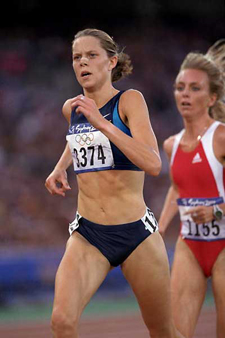 RUDOLPH: When you do it for that long, the passion was always there but you need to find ways to keep it fresh and to give yourself a different goal, a different regime, a different routine. Moving from the mile to the 5K, I really believe the 5K is one of the hardest events out there. It’s an art form to balance the speed and strength that you need in the 5K and how hard it hurts. It hurts from the moment you start that race to the moment you finish that race. It’s a long race to hurt for. The 10K is a different kind of hurt. When you've done the 5K for so long, it’s a hurt that you can manage, and the 10K becomes more of a mental challenge and I loved that part of the 10K when I moved up. I loved the mental aspect of it, watching people break in a race because they have been out there on their feet so long just going round in circles. Time for doubt to creep in. I love that part of just being focused, and getting a sniff of home and knowing that if I was there with two laps to go, that I was in contention. Obviously I would have loved to have been able to move to the half-marathon and the marathon, but the body just didn't let me go that far. No regrets. Loved it, loved every minute of it.
SOLINSKY: I think everyone wants to be a miler, so that’s what I was thinking in high school. I probably had more success in the two mile than the mile, but in my mind I’d run really fast in the mile. I ran 4:03 coming out of high school, and I was like that’s really good for a high schooler. I could progress and be a miler. I tried it in college, and (former Wisconsin coach) Jerry (Schumacher) said no that’s not going to happen. “Look what you did in cross country. You were 15th in a 10,000 cross country race as a freshman. You’re a strength runner. Look at the way you train, look at what helps you to be a better athlete. Strength running. You’re going to be a strength runner, and you’re going to do the longer distances.” At first I didn’t want to, but once I saw the results of his views and his training, it was easy to buy into that.
Amy, in the 1996 Olympic Trials, you finished third in the 5,000 to two legends in Lynn Jennings and Mary (Decker) Slaney. What similar opportunities are out there today for aspiring runners, learning from veteran runners?
RUDOLPH: When the 5K became an Olympic sport, that American record changed hands quite a few times in the first couple years because it was a new sport and people were realizing I have a chance to run a great race here and a good time. When Deena Kastor won that bronze medal in the Athens Olympics, I think a lot of U.S. runners always believed that they could do it but she did it. If Deena could do it look what her hard work has paid off. You know we all can do it.
I think those young runners look to someone like her or someone like myself or a Jen Rhines who has been in the sport a long time and who has made a whole bunch of changes and done well. Hopefully I inspired somebody, and these girls now the Kara Gouchers and the Shalane Flanagans are inspiring a whole ’nother generation coming up. That’s just how it works. Time evolves, the sport evolves, the science evolves and the times will get faster and the performances will get better. We could have somebody in this room that is going to be the next Shalane or Kara. You just never know.
Both of you have had tremendous success as newbies to an event, with Amy making the 1996 Olympic team in her second 5K ever and Chris setting an American Record in 2010 in his first 10K. How does that develop going into a race that’s unforeseen territory?
SOLINSKY: I think it’s naivety. You just go in, you don’t have the expectations, you don’t have the fears that someone else would. In that 10000-meter race, I approached it like I could easily blow up. At the same time, I protected myself by saying if I blow up, I could always drop out. No one is expecting me to do anything. You don’t have any expectations of yourself, and you don’t have any outside expectations. I’m just going to have fun and compete. Like Amy said, it’s all about competing.
That race I was just trying to win. Lucky enough for me, Galen (Rupp) was wanting the American Record. Some say that I should have helped him out, but I had never run one before. I never had ambitions of going after the American record, at least at that point. I was just going to run, and it worked out the way it did. It was all just trying to win and being naïve. I didn’t know what any of the splits meant … at all.
Amy, you told the campers of your parents’ surprised reaction when you informed them of your decision to be a professional runner. How did being a pro runner change during more than a decade in the sport?
RUDOLPH: I don’t think people took it seriously 20-35 years ago. I think people thought people were crazy that’s all they do. A lot of people back in the ’80s worked and ran. That was just the way it was then. Now shoe companies are more involved, and there are more groups that you can join. You can give yourself the best opportunity and not have any regrets. It’s been fun to see that. When I first started out, there weren’t these running groups all over the country to join and be a part of. Toward the end of my career, these groups formed and you saw U.S. distance running evolve and now we can run with the best in the world. It’s been fun to watch. I’m a fan of the sport, always and forever, so it’s been fun to watch these young girls develop out of these groups and go to the starting line at major marathons, go to the Olympic starting line, and know these girls have a chance to medal and do something great.
Patience is very important in running, whether during a race or dealing with injuries and such. How was/is your patience?
RUDOLPH: It’s an art form, learning to read your body and know when it’s something that you can push through and when it’s something that you have to step back and say, Is that right? What do I need to do? Do I need to take a day off? Do I need to take two days off? Is it a trip to the physio that’s going to fix this? It’s a work in progress, it’s an art. And over time you learn and you become more in tune with your body. It’s a fine line, you can overanalyze it. You can sit around and overanalyze how you feel all the time as well.
Chris talked about having patience, you have to be prepared to put in long blocks where you are just tired all the time. And you think gosh I’m never going to get to that point where I feel good again. You have to be patient, and when you have those setbacks, you have to be patient on the comeback. They say it takes twice as long to come back as it did to fall out. It’s part of the deal, it’s part of being a runner, part of being an athlete, any athlete.
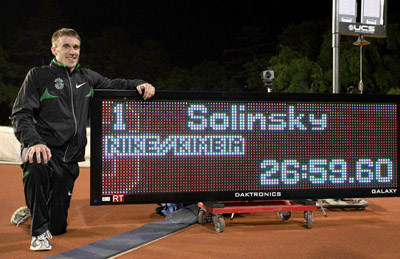 SOLINSKY: In terms of what I’ve learned, things I thought I learned early on, like learning to listen to your body. There are a lot of things people take for granted. Your body’s really smart. It will tell you a lot of things. I was always very good at a younger age of reading that line and not being afraid to take a day off. Not even jogging, just take a day off.
Last year I think I got blinded by my ambitions. I saw the signs, but I didn’t read the script. I didn’t follow the rules of what my body was trying to tell me what to do. I was like, It’ll be fine because I’ve never gotten hurt before. It’ll be fine. I’ll just push through it. In the end, I caused a lot more damage than good.
In terms of a race, you learn to push yourself in training. I call it a red line. You learn to ride that red line. In a race, especially a 5,000, that red line is ever present, within a couple tenths of a second per lap. If you’re a little bit over, you’re done for the race. You have to ride that red line, and it took me a lot of years to figure out how to do that in the 5K. A lot of blow ups. A lot of races where I crossed the line, and I’m like Ah, I think I had a little bit more left. I could have ridden that line a little bit better. In 2010, I think I did a really good job of riding that line. To be able to ride that line and come off of it well and finish a race successfully is pretty awesome. I can’t wait to feel that again.
Amy, injuries were a major factor in your decision to retire from competition. Talk about your decision to leave world-class running behind.
RUDOLPH: I’m not going to lie, it was a very difficult time for me. It’s all I had known for a very long time, and you go through phases. There’s like a mourning phase, and then there’s a phase where you ask what is my purpose? I’ve been Amy Rudolph the runner. What’s my purpose? Just letting go. Letting go of being so regimented and being so focused. It’s very difficult and it doesn’t happen overnight, it takes a long time. I’m still learning now to compartmentalize and where it fits into my life now. Nobody really talks about it because everybody probably grieves in a different way. It was very difficult, but I feel really at peace with it now and I feel like I’m ready to take on the next chapter in my life. We have (my husband) Mark (Carroll) set up – he is doing his dream job (at Auburn) and he’s loving it – so I think it’s time for me to follow my passion, that’s to get back in the sport and to get involved working with young kids. Try to make a difference and give back to the sport. The sport has been really, really good to me, so if I can just give back a little bit.
Are distance runners different today than they were 15, 20, 30 or 40 years ago?
SOLINSKY: Yes, and no. I think you adapt to your competition, whether or not you assess your strengths versus their strengths. A lot of the east African runners can run a blistering last lap. It’s not necessarily that they’re any faster than us, but they have such a developed aerobic system that you get to the bell and they’re not hurting. They might be hurting, but they’re not hurting like we are where we are at redline or over, where you are completely anaeroebic and barely hanging on. They are full of running.
There are a lot of people around the world that can run a 52 or 53 quarter, a 1:50 low 800 but can you do that off a solid pace. Can you do that after 23 or 10.5 laps? You have to adapt yourself. Galen is doing a really good job with that, training with Mo and with Alberto. He’s adapted his racing, he is strong enough to be able to close that way at the end of a race.
That’s where I was getting to in 2010, and I really believe I was ready to do something in 2011. U.S. championships I closed in 3:58. I felt like I had more running in me, I just couldn’t go any faster at the end of the race. I was trying to save something for the end of the race to go faster but I didn’t have that. That kind of opened my eyes. OK, that’s what I need to peak for the world championships. I need to go faster earlier, and really run the heck out of that last mile. It’s frustrating to not have had the opportunity to do that there, and then on top of it, this year not being able to do that. I really believe that I’d laid the foundation work to pull that off successfully. If you run the last mile in 3:56 or 3:55, you may not win but you’re going to be in the medals. You’re going to thin it out pretty good. It’s hard to watch (the Olympics) but at the same time I know exactly what I need to do when I’m coming back.
Going back to Villanova great Sydney Maree, American men’s distance running and records appear to have been greatly affected by runners who had established or were establishing themselves in their native country before become U.S. citizens. Do you believe that has had a factor in how American distance running has developed and all of the U.S. records that have been broken in recent years?
SOLINSKY: I definitely agree with that. One of my direct competitors, Bernard Lagat, I’ve heard a lot of people critique that he’s not an American or they asterisk things that he does. People that are negative about him, we can think what we’re doing today in distance running because of him. In our training group alone, Matt Tegenkamp and myself, starting back in 2006, all we were trying to do in training is how do we beat Lagat? How do we win a U.S. title? If we can’t win a U.S. title, how are we going to win a world title? And it didn’t hurt that we were running against a guy of his caliber … the No. 2 1,500-meter runner of all time.
I thank (Lagat) for a lot of the success that we’ve had as a country and a lot of success that I’ve had myself. If he hadn’t raised my sights to where they are now, I wouldn’t be who I am now. I probably would still be a 13:00-13:10 guy, very happy to be one of the best Americans ever. He’s made it so we’re very discontent. He’s not the only one. Guys like Abdi (Abdirahman), Sydney Maree, Khalid Khannouchi, (but) we wouldn’t be where we are without Lagat.
Chris, you are returning to competition in Sunday’s historic 7-mile Falmouth Road Race. Do you have much road racing experience? Why Falmouth? How has your training been progressing?
SOLINSKY: I’ve only run two road races, and they’re both the Fifth Avenue Mile in New York. I’ve run fun run type things when I was in high school. I chose Falmouth because I did the (track) mile there a couple years ago. I had a really good time watching the race. It seemed like a good one, it fit well in the calendar. I’m racing the U.S. 20K (on Sept. 3) and the U.S. 10 mile (Oct. 7) following it, so it’s kind of like once every month racing. I’ve actually been training close to full capacity – 85- to 100-mile weeks – for the last month or so. I’m not where I need to be by any means, but we just decided I’ve got the foundation enough to not get hurt running these races but use these races to get in better shape. The goal for the next two especially is to run 5 minute pace for 7 miles and then 20K, and hopefully I’m ready to race, like really race by the U.S. 10 mile.
Do you see your future in the 5K or 10K?
SOLINSKY: That one’s hard because my heart’s always going to be in the 5. As much success as I’ve had in the 5, I feel like there’s unfinished business. I have a number in my head of a time I think I can run. Until I run that time, I think I will always have that unfinished business. Being realistic, by the next Olympics I’m probably going to be too slow for the 5K. You are going to have plenty of 1,500 (meter) guys moving up who will blow my doors off the last lap. I’m just being realistic in moving up, knowing that I can move up. If the opportunity presents itself that the 5 looks like it’s a credible race, I’m not going to close the door on that by any means. Just trying to be realistic and move on without being one of those crying babies that clings on for dear life.
Will you second guess your decision to have hamstring surgery last year while you are watching the Olympic 5,000 and 10,000 finals?
SOLINSKY: No, because I know that what I was trying to do this year to get back to the Trials would have landed me right where I was last year, and I’d be out for a whole ’nother year. It was a tough decision, but it’s a smart decision for the future of my career. I could have definitely bit my bullet – it’s the Olympics, how many times do you get a chance to compete for a spot in the Olympics – but if I would have done that and my career would have ended, I would have been very unhappy and upset with myself. Making the decision of risk missing one for the potential of two more rather than try to make one and not have any more chances after this is kind of where my head might be.
What’s the current state of track and field in the United States?
RUDOLPH: As far as the athletes, we’ve never been better, never been stronger, never been deeper. The true fans of the sport, there are fans all over this country. It’s up to the people that are in the higher up positions that run the sport of track and field in the U.S. to find a way to make it work and get people to come. What they’ve been doing isn’t working.
SOLINSKY: I tend to believe it’s getting better and better. I have met more and more people who have not been into the sport that have gotten into the sport. There are definitely things we can improve on. I really am hopeful the new (USATF) CEO can uphold the promises that he’s made because he’s done really well in NASCAR and with Gospel records and such. I think a guy like that bringing a different background and different diversity will really help the sport. I’m hopeful that it can improve even more, but I think we’re far away from dying, that’s for sure. I think we’re in a good state, but there’s always room for improvement.
Although their professional running careers barely overlapped, Amy Rudolph and Chris Solinsky have plenty in common.
Listed among the fastest American distance runners ever, each has had their name next to an American record, with Rudolph for the 5,000-meter run as the second U.S. woman under 15 minutes (14:56.04) and Solinsky as the first non-African runner under 27 minutes in the 10,000 (26:59.60). Both also got their start as their state’s best 1,600 runner, with Kane Area product (and two-time Olympian and Auburn assistant coach) Rudolph pulling off three 1,600-3,200 doubles at the PIAA track meet and Solinsky winning a pair of Wisconsin “metric mile” titles as a prep and running a 4:03.60. NCAA championship careers followed at Providence for Rudolph and Wisconsin for Solinsky before they turned their attention to running for a living.
Last week, they spoke with Penn Track XC after sharing some insights into their running careers with the 120-plus campers at the California University Cross Country Camp, saying they would be paying close attention to the Olympic races in London.
Both of you were accomplished milers in high school. Is it just the natural progression that moved you first to the 5,000 meters and finally the 10,000 or were you better suited for the distance races?
RUDOLPH: When you do it for that long, the passion was always there but you need to find ways to keep it fresh and to give yourself a different goal, a different regime, a different routine. Moving from the mile to the 5K, I really believe the 5K is one of the hardest events out there. It’s an art form to balance the speed and strength that you need in the 5K and how hard it hurts. It hurts from the moment you start that race to the moment you finish that race. It’s a long race to hurt for. The 10K is a different kind of hurt. When you've done the 5K for so long, it’s a hurt that you can manage, and the 10K becomes more of a mental challenge and I loved that part of the 10K when I moved up. I loved the mental aspect of it, watching people break in a race because they have been out there on their feet so long just going round in circles. Time for doubt to creep in. I love that part of just being focused, and getting a sniff of home and knowing that if I was there with two laps to go, that I was in contention. Obviously I would have loved to have been able to move to the half-marathon and the marathon, but the body just didn't let me go that far. No regrets. Loved it, loved every minute of it.
SOLINSKY: I think everyone wants to be a miler, so that’s what I was thinking in high school. I probably had more success in the two mile than the mile, but in my mind I’d run really fast in the mile. I ran 4:03 coming out of high school, and I was like that’s really good for a high schooler. I could progress and be a miler. I tried it in college, and (former Wisconsin coach) Jerry (Schumacher) said no that’s not going to happen. “Look what you did in cross country. You were 15th in a 10,000 cross country race as a freshman. You’re a strength runner. Look at the way you train, look at what helps you to be a better athlete. Strength running. You’re going to be a strength runner, and you’re going to do the longer distances.” At first I didn’t want to, but once I saw the results of his views and his training, it was easy to buy into that.
Amy, in the 1996 Olympic Trials, you finished third in the 5,000 to two legends in Lynn Jennings and Mary (Decker) Slaney. What similar opportunities are out there today for aspiring runners, learning from veteran runners?
RUDOLPH: When the 5K became an Olympic sport, that American record changed hands quite a few times in the first couple years because it was a new sport and people were realizing I have a chance to run a great race here and a good time. When Deena Kastor won that bronze medal in the Athens Olympics, I think a lot of U.S. runners always believed that they could do it but she did it. If Deena could do it look what her hard work has paid off. You know we all can do it.
I think those young runners look to someone like her or someone like myself or a Jen Rhines who has been in the sport a long time and who has made a whole bunch of changes and done well. Hopefully I inspired somebody, and these girls now the Kara Gouchers and the Shalane Flanagans are inspiring a whole ’nother generation coming up. That’s just how it works. Time evolves, the sport evolves, the science evolves and the times will get faster and the performances will get better. We could have somebody in this room that is going to be the next Shalane or Kara. You just never know.
Both of you have had tremendous success as newbies to an event, with Amy making the 1996 Olympic team in her second 5K ever and Chris setting an American Record in 2010 in his first 10K. How does that develop going into a race that’s unforeseen territory?
SOLINSKY: I think it’s naivety. You just go in, you don’t have the expectations, you don’t have the fears that someone else would. In that 10000-meter race, I approached it like I could easily blow up. At the same time, I protected myself by saying if I blow up, I could always drop out. No one is expecting me to do anything. You don’t have any expectations of yourself, and you don’t have any outside expectations. I’m just going to have fun and compete. Like Amy said, it’s all about competing.
That race I was just trying to win. Lucky enough for me, Galen (Rupp) was wanting the American Record. Some say that I should have helped him out, but I had never run one before. I never had ambitions of going after the American record, at least at that point. I was just going to run, and it worked out the way it did. It was all just trying to win and being naïve. I didn’t know what any of the splits meant … at all.